Simon Galloway/Getty Images
Aston Martin encouraged by Honda's progress on vibration issues
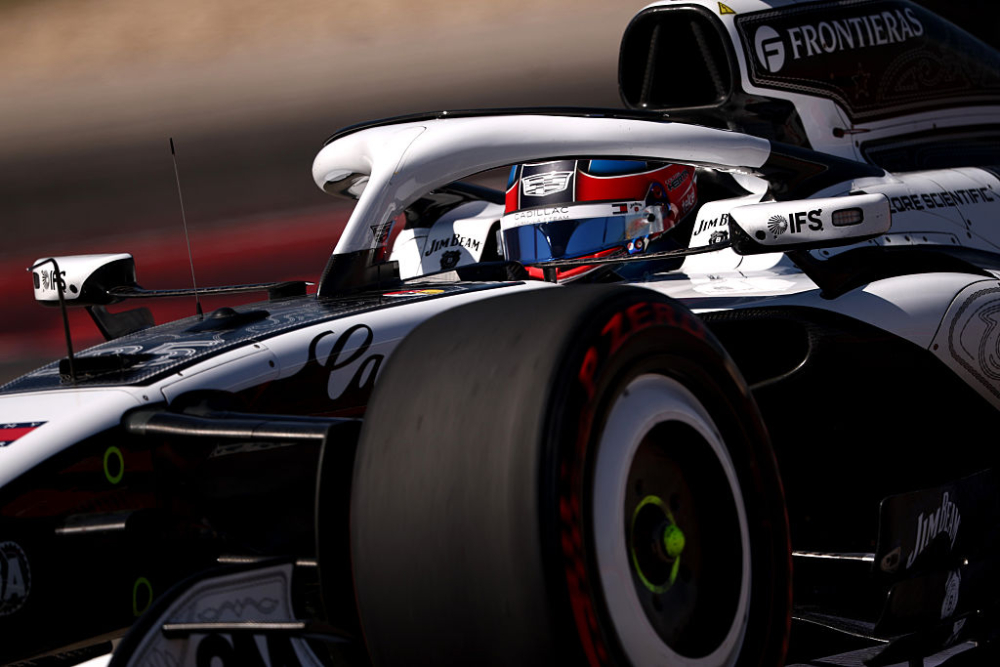
Aston Martin is confident it could have finished the Australian Grand Prix if it wasn’t managing its battery stock, after Honda saw progress with its vibration issues.
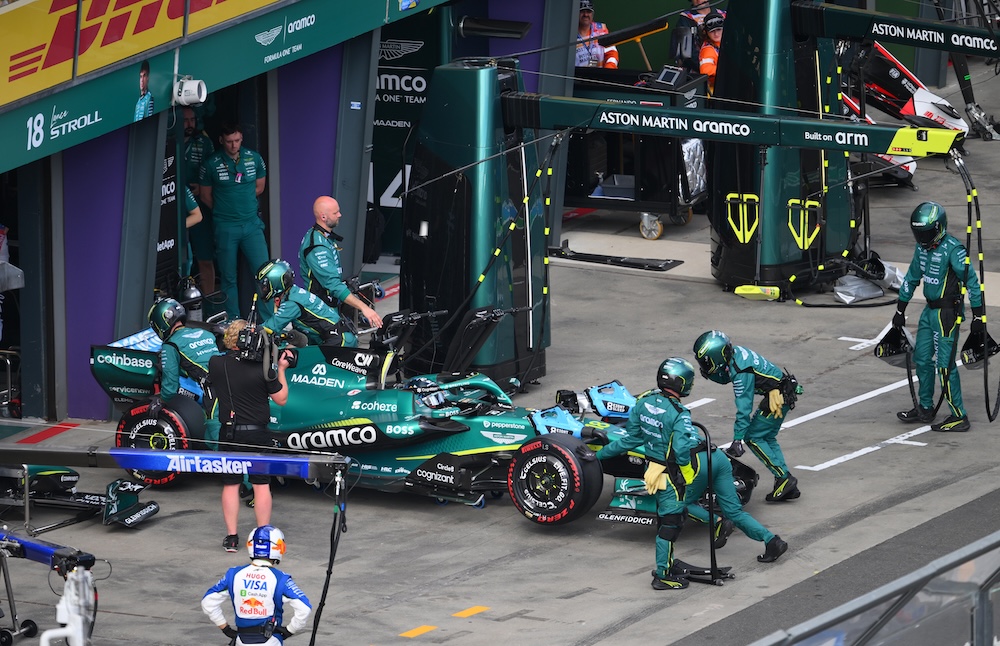
Excessive vibrations - believed to come from the internal combustion engine - have been causing a number of reliability issues for the Honda battery, as well as the Aston Martin chassis. The team’s mileage was heavily limited by the battery problems that left it with just two operational batteries from FP2 onwards in Melbourne, a shortage they need to manage through the double-header that includes China this coming weekend.
Lance Stroll completed 43 laps of the Australian Grand Prix, while Fernando Alonso managed 21 - with both cars spending a number of laps in the garage mid-race - but chief trackside officer Mike Krack says the approach to the race was not due to any issues surfacing.
“From a performance point of view, probably not the best day in history, but it was a good day for us as a team, together with our partners, in terms of mileage, in terms of reliability,” Krack said. “It was the day where we learned the most so far, and considering what we have had so far, I think this was a good day.
“At the end of the day, I think it is common knowledge that we are not rich in any parts. And there wasn't much to gain from where we were, and we took the decision together to preserve the parts.
“There were no PU-related issues, and we don't have a crystal ball, but I'm quite confident that we could have finished.”
With another race weekend to follow in Shanghai, Honda Racing Corporation’s trackside general manager Shintaro Orihara said the steps made since testing should allow the Japanese manufacturer to start unlocking more performance from its power unit.
“From a Honda viewpoint, this event was definitely an important point to check the improvement of battery reliability,” Orihara said. “So after Bahrain testing, Aston Martin and Honda worked together very hard to find a solution, and that was incredibly hard work. The guys worked almost 24 hours, maybe not 24, but such long hours to find a solution.
“Then we brought some countermeasure to here, and checked the effect of the countermeasure on day one. We found good progress comparing to Bahrain, and then we implemented that countermeasure onto day two and day three. [In the race] we build up a lot of mileage. From a vibration viewpoint, we are confident we could cover the full mileage in the race, so that is a big improvement from Aston Martin and Honda.
“Now we have confidence to build up more mileage on batteries. So, next week should be a more standard week … From Bahrain to here, we have seen a big improvement in terms of battery vibration. Then China, we will focus on building up mileage and also gathering the data to improve our performance and also optimize energy management. It’s difficult to say we can get big steps, but we just keep pushing hard to improve our performance.”

Chris Medland
While studying Sports Journalism at the University of Central Lancashire, Chris managed to talk his way into working at the British Grand Prix in 2008 and was retained for three years before joining ESPN F1 as Assistant Editor. After three further years at ESPN, a spell as F1 Editor at Crash Media Group was followed by the major task of launching F1i.com’s English-language website and running it as Editor. Present at every race since the start of 2014, he has continued building his freelance portfolio, working with international titles. As well as writing for RACER, his broadcast work includes television appearances on F1 TV and as a presenter and reporter on North America's live radio coverage on SiriusXM.
Read Chris Medland's articles
Latest News
Comments
Comments are disabled until you accept Social Networking Cookies. Update cookie preferences
If the dialog doesn't appear, ad-blockers are often the cause; try disabling yours or see our Social Features Support.